Home › Preparedness › Water Systems
Anatomy of a Water Emergency: What Actually Happens, Hour by Hour
Most people picture a water emergency as a single event. Utility records and news reports from Texas, Mississippi and a decade of Gulf Coast storms show something else: a sequence you can set a clock to.
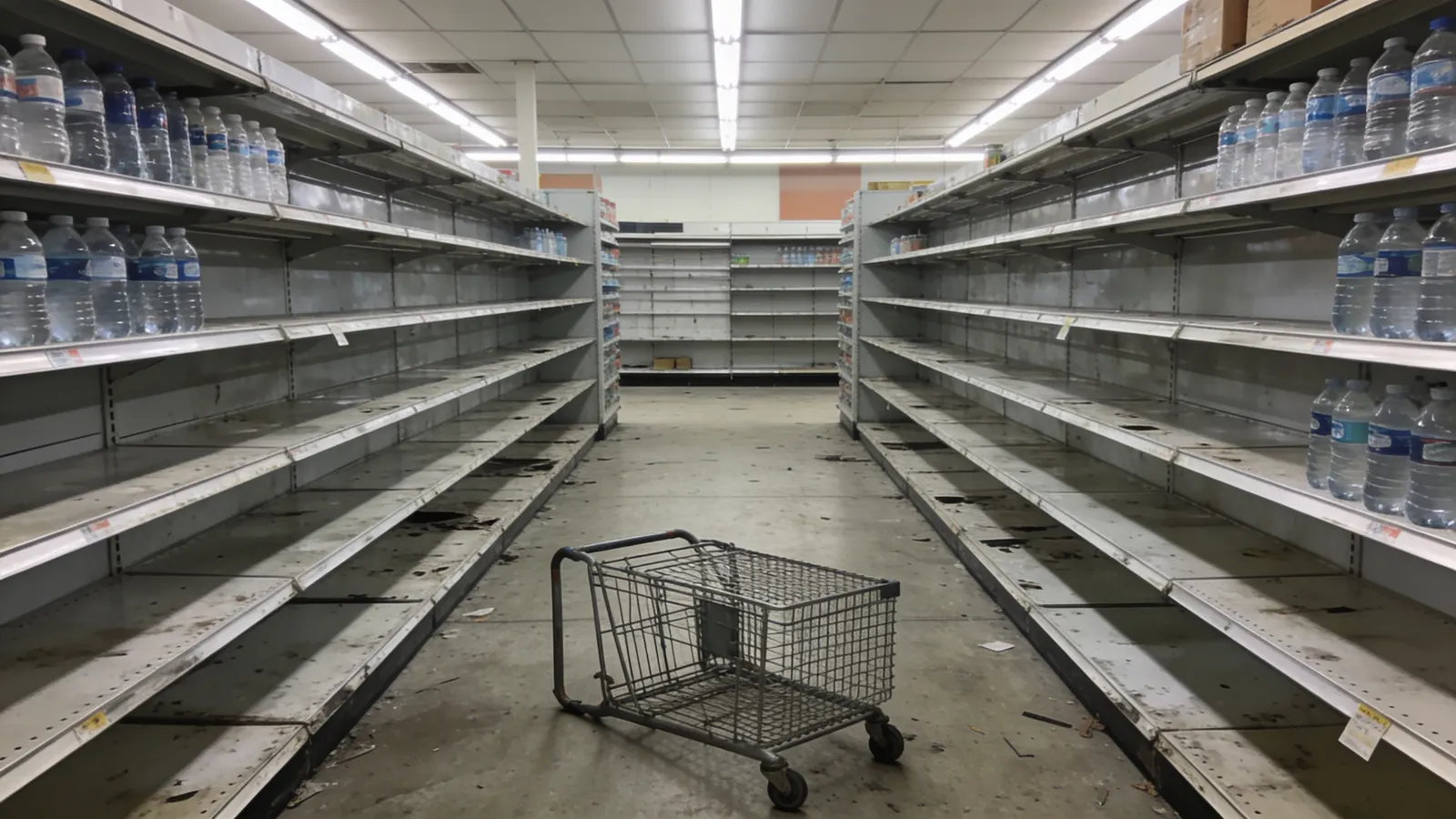
Ahead of Hurricane Ian, Florida grocery chains were rationing bottled water days before landfall: two cases per household, per day. In Philadelphia, one precautionary city alert about a chemical spill upriver cleared the water aisles across entire neighborhoods in roughly two hours.
Two hours. Not two days.
It plays out the same way every time, and there is a reason for that. Municipal water is usually the first utility to fail and the last one to fully return. What follows is the sequence, reconstructed from utility statements and contemporary news reports.
The 14-Day Sequence
Six stages, from the first run on the stores to the day the advisory finally lifts. Most families plan for stage three and run out at stage five.
The first run on the stores
A storm gets a name, or a forecast dips below zero, and the first wave hits the shelves. Not panic, just thousands of households having the same sensible idea at the same time.
Ahead of Hurricane Ian, Florida chains were already limiting customers to two cases of bottled water per day at this stage.
The pattern under the timeline
Read the six stages again and one thing repeats: every single failure is the same failure wearing different clothes. Dependence on water that somebody else has to deliver. The store. The truck. The treatment plant. The grid.
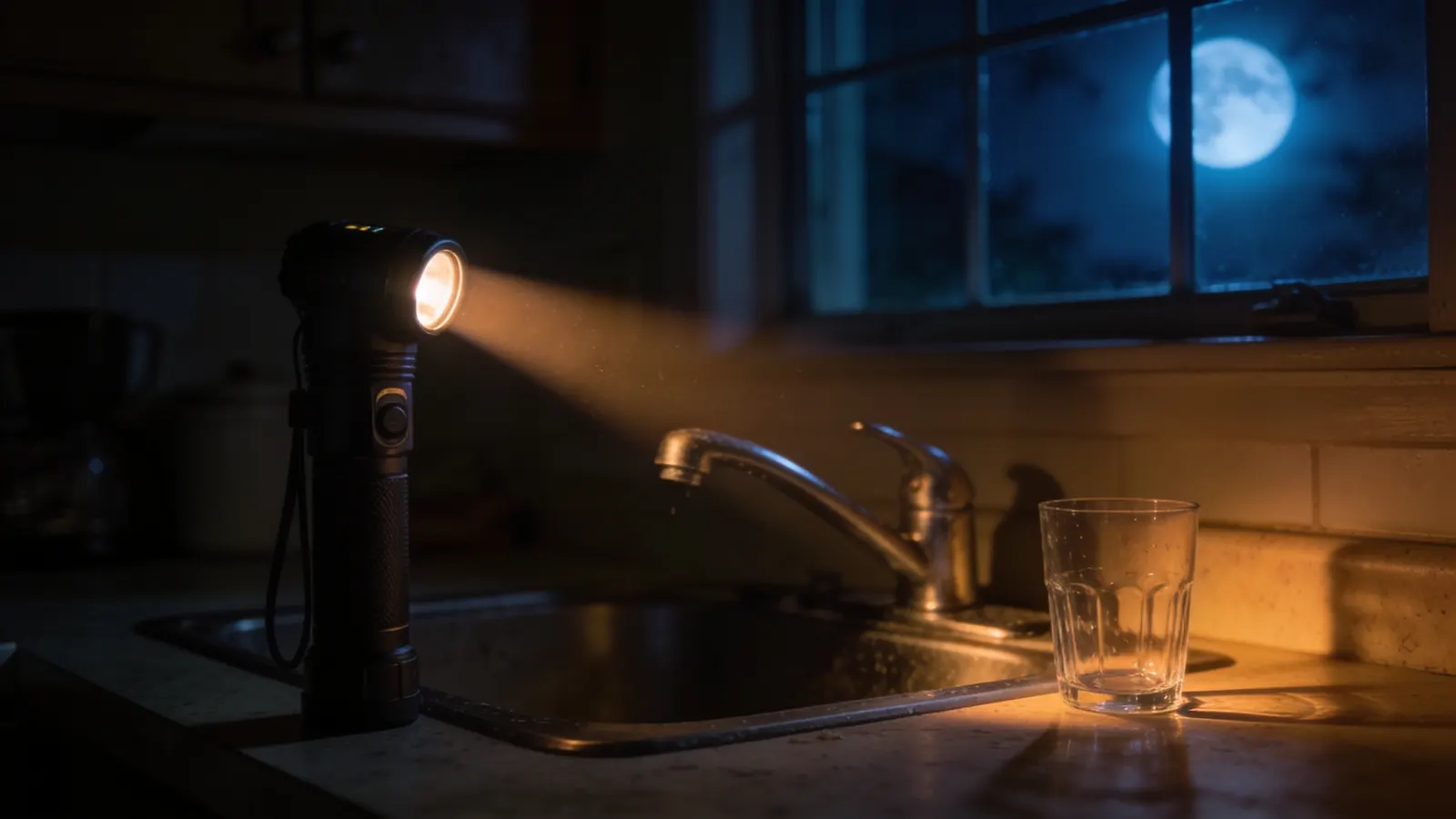
The tap is the first utility to fail. So plan for the tap, not for the storm.
That is why the practical advice inside preparedness circles has shifted over the past few years, away from bigger stockpiles and toward equipment. FEMA and the CDC recommend one gallon of water per person per day, with two weeks as the goal. For a family of four that is 56 gallons, roughly 467 pounds, rotated about every six months. Very few households do it, and the ones who try tend to discover that a quarter ton of water is a chore rather than a plan.
Filtration is the other way to hit the same target. Instead of storing the water, you store the ability to make it.
Capacity versus inventory
Stored, that capacity weighs over 12,000 pounds and needs replacing twice a year. At the roughly $1.22 a gallon US bottled water averages at retail, it also runs past $1,800. The kit weighs a couple of pounds and does not expire.
How gravity filtration works
No electricity, no pumping, no plumbing. The same physics that drains a bathtub.
*Filtration figures are the manufacturer's stated specification for the 0.1-micron hollow-fiber core. This is a filter, not a purifier. No virus removal, chemical removal or health outcome is claimed.
What that looks like as equipment
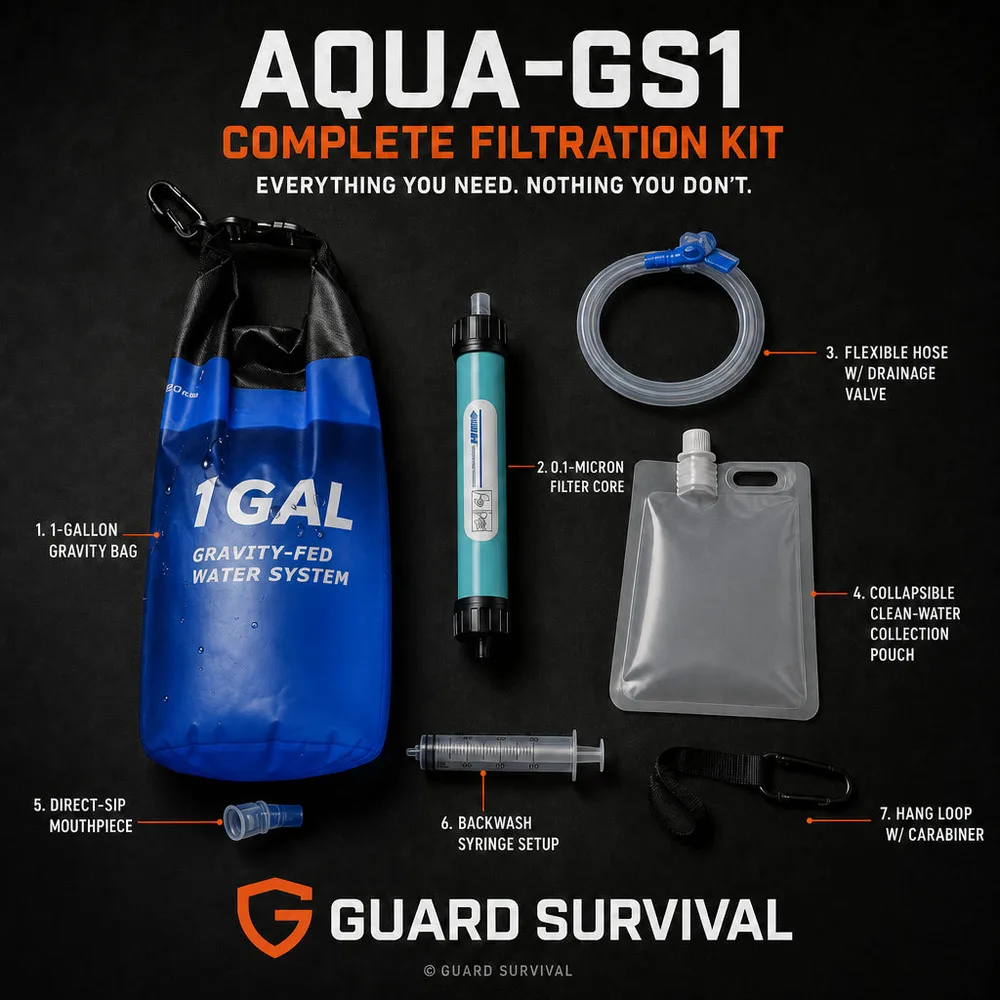
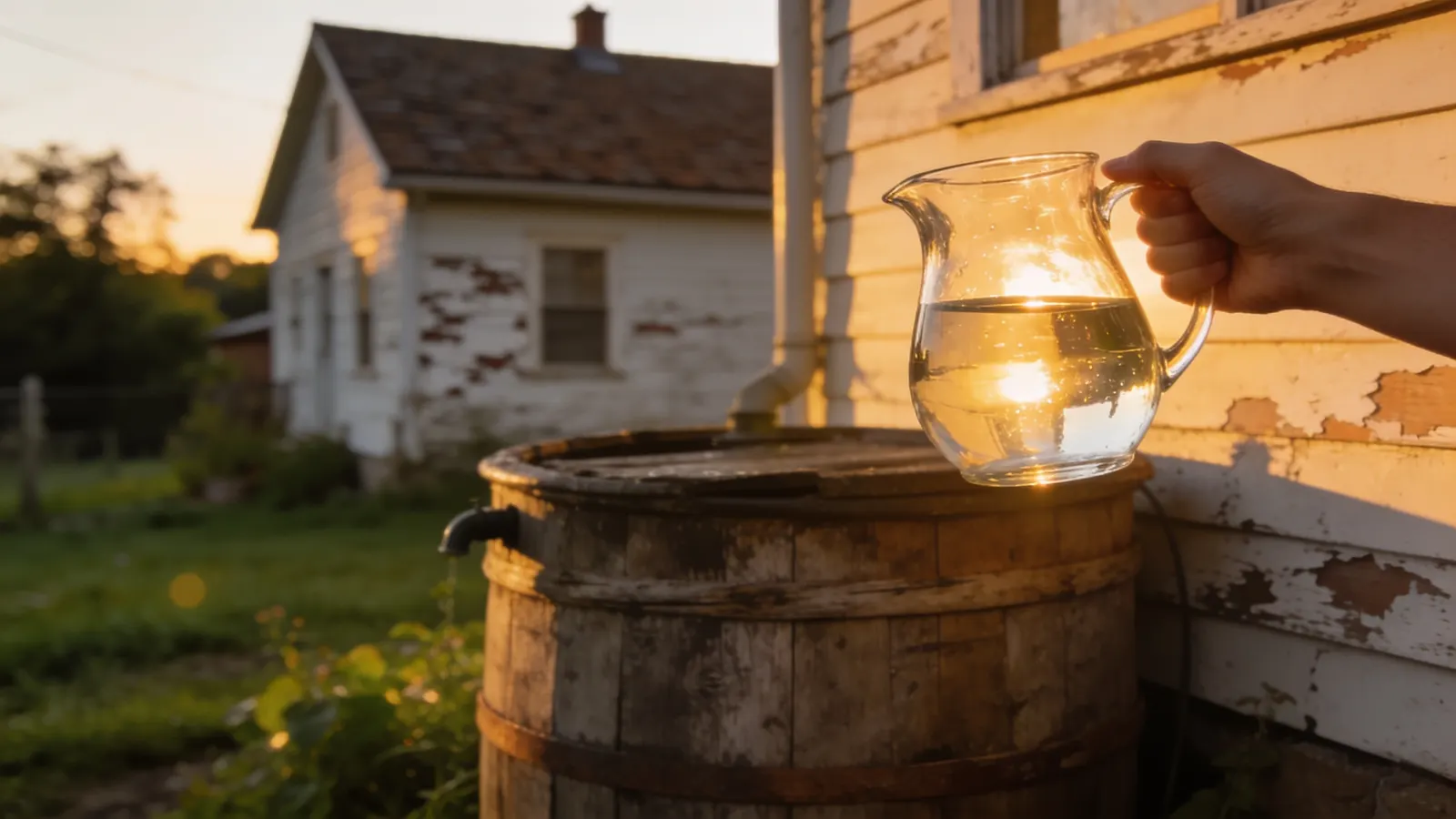
The kit built around this mechanism is the AQUA-GS1 from Guard Survival, a seven-piece gravity-fed system. You fill the one-gallon bag from whatever water you can reach, a rain barrel, a creek, a pond, or your own stored containers, hang it, and gravity pulls the water through a 0.1-micron hollow-fiber core. Clean water collects in the pouch below. Nothing to plug in, nobody standing there pumping.
One filter core is rated for up to 1,500 gallons. Against the FEMA figure of one gallon per person per day, that is a family of four's two-week target roughly 26 times over, from a kit that weighs a couple of pounds and stores in a closet, a trunk or a go-bag.
AQUA-GS1 Survival Kit
- ✓0.1-micron hollow-fiber core. Removes 99.99% of bacteria, parasites and microplastics per the manufacturer's specification.
- ✓Up to 1,500 gallons per filter. Months of drinking water for a household.
- ✓Gravity-fed. No power, no batteries, no pumping, no plumbing.
- ✓Seven pieces, complete. Bag, filter core, hose, collection pouch, mouthpiece, backwash syringe, hang loop.
- ✓Never expires in storage. No rotation schedule, no best-by date.
Matching that filter's rated capacity with bottled water runs past $1,800 at average US retail prices, and needs restocking every storm season.
Three cores, one order · free US shipping · 90-day money-back guarantee
The honest limits
Worth being precise about what this equipment does and does not do. It is a filter, and it behaves like one. The core is specified to remove 99.99% of bacteria, parasites and microplastics from fresh water sources. It does not desalinate, it is not a chemical treatment, and owning one does not replace following official guidance during an emergency.
It also fills one gallon at a time. That is a genuine difference from a plumbed system, and it is the honest trade for something that needs no power and fits in a closet. What it changes is your position in the sequence above. Every stage in that timeline assumes you need something delivered.
Common questions
I already keep bottled water. Is this redundant?
Is it complicated to use?
One gallon at a time. Is that enough for a family?
What if I never end up needing it?
Order it, run your own rain barrel through it, take a full storm season to decide.
The bottom line
Keep a small bottled buffer. That is still sensible for the first hours of anything. But stored water runs out, usually within days of exactly the kind of event that strips every shelf in the county, and the shelves are gone before the event even starts.
The ability to make water does not run out until the filter does. Given what the last few storm seasons have done to store shelves, it is the rare preparedness purchase that costs nothing to be wrong about.